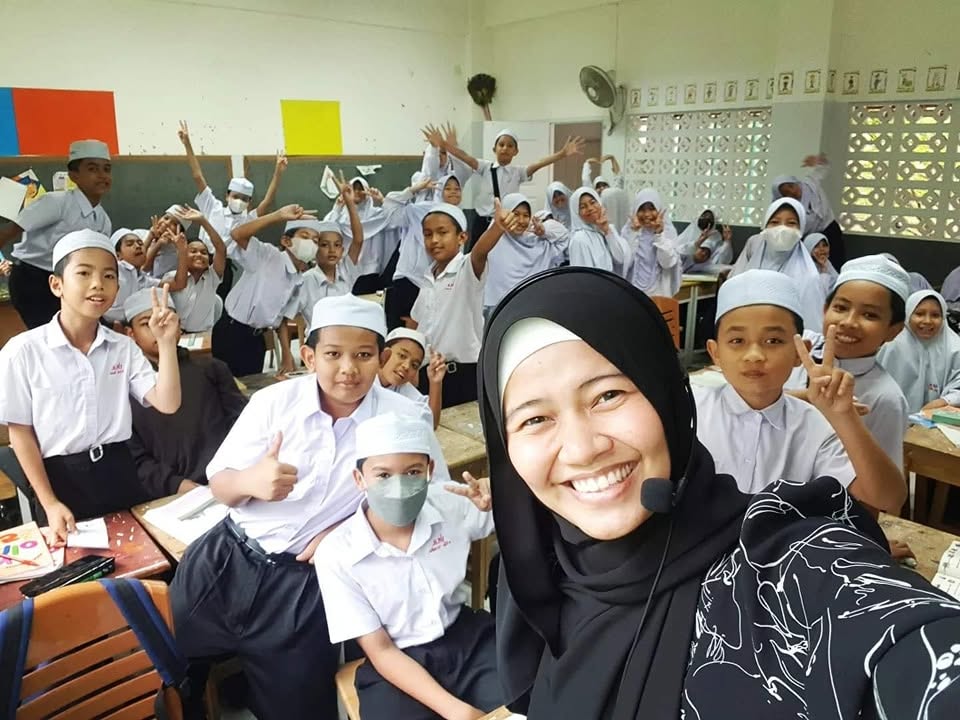
ปัจจุบันเธอดำรงตำแหน่งผู้ช่วยผู้บริหารของเครือโรงเรียนประทีปศาสน์ จ.นครศรีธรรมราช ซึ่งเป็นเครือโรงเรียนเอกชนอิสลาม 3 แห่งที่ครอบครัวของเธอบริหารมายาวนาน นอกจากนี้เธอยังก่อตั้งโรงเรียนสอนภาษา ชื่อ "โรงเรียนเสริมทักษะพิมส์เพลิน" หรือที่คนในพื้นที่รู้จักกันในชื่อ "โรงเรียนยีราฟ ท่าศาลา" หากนับรวมทุกโรงเรียนที่เธอมีส่วนร่วม ซีมทำงานกับนักเรียนตั้งแต่ระดับก่อนอนุบาลจนถึงมัธยมปลาย ครอบคลุมเยาวชนกว่า 2,000 คน
แต่สิ่งสำคัญไม่ใช่ตัวเลข หากคือสิ่งที่เธอสร้างขึ้น และการเปลี่ยนแปลงที่ขยายออกไปไกลกว่านั้น
ปัญหาไม่ได้อยู่ที่ตัวนักเรียน
ตอนที่ซีมเป็นครูผู้นำฯ ที่โรงเรียนแก่นทองอุปถัมภ์ กรุงเทพฯ เธอพบว่านักเรียน ม.ต้นหลายคนยังเขียนตัวอักษรภาษาอังกฤษกลับด้าน บางคนจำตัวอักษรไม่ได้แม้แต่ตัวเดียว หนังสือเรียนบอกให้เธอเดินหน้าสอนต่อ แต่สิ่งที่นักเรียนต้องการกลับเป็นการย้อนไปเรียนพื้นฐาน
เธอจึงย้อนกลับไปสอน Phonics การอ่าน การเขียน และการออกเสียง พื้นฐานที่พวกเขาควรได้เรียนมาตั้งนานแล้ว
"เราดันทุรังสอนตามเนื้อหาในหนังสือ ก็เหมือนบังคับให้คนที่กลัวน้ำว่ายน้ำ" เธอกล่าว
เมื่อนักเรียนเริ่มอ่านออก สิ่งที่เปลี่ยนไปไม่ได้อยู่ที่การฝึกไวยากรณ์ คนที่เคยเงียบในห้องเรียนเริ่มยกมือตอบคำถาม คนที่เคยหลีกเลี่ยงภาษาอังกฤษเริ่มนำเนื้อเพลงมาถามความหมายกับครู การอ่านออกไม่ได้สอนแค่วิชา แต่มันทำให้พวกเขามีเหตุผลที่อยากเรียนรู้ต่อ
บทเรียนจากห้องเรียนหนึ่ง กลายเป็นระบบของทั้งโรงเรียน
เมื่อซีมกลับมาช่วยดูแลโรงเรียนของครอบครัวหลังช่วงโควิด เธอพบปัญหาเดิมที่รออยู่ แต่คราวนี้ขยายใหญ่ขึ้น หลังการเรียนหยุดชะงักไปหนึ่งปี พื้นฐานการอ่านภาษาอังกฤษของนักเรียนหลายคนถดถอยลง และคราวนี้เธอไม่ได้แก้ปัญหาแค่ห้องเรียนของตัวเอง แต่แก้ให้ทุกห้องเรียน
เธอเรียนเพิ่มจนได้ประกาศนียบัตรด้าน Phonics นำความรู้นั้นมาอบรมครูทั้งโรงเรียน และช่วยออกแบบหลักสูตรใหม่ให้เริ่มสอน Phonics ตั้งแต่อนุบาล 3
ผลที่เห็นได้ชัดคือ นักเรียนระดับประถมปลายส่วนใหญ่อ่านออกเขียนได้ในระดับที่โดดเด่นกว่าโรงเรียนอื่นในพื้นที่ เมื่อจบ ป.6 และไปสอบเรียนต่อ ม.1 ที่อื่น ครูและผู้สัมภาษณ์มักพูดตรงกันว่า "ภาษาอังกฤษดีมาก กล้าสื่อสาร" ซึ่งถือเป็นเรื่องที่โดดเด่นในบริบทของโรงเรียนเอกชนสอนศาสนาอิสลามในต่างจังหวัด
คลื่นที่ส่งต่อถึงโรงเรียนที่เธอไม่เคยสอน
ตอนที่ซีมเป็นครูผู้นำฯ เธอสอนนักเรียนประมาณ 100 คนจาก 3-4 ห้องเรียน เมื่อเธอขยับมาอบรมครูทั้งโรงเรียน จำนวนนักเรียนที่เข้าถึงก็เพิ่มขึ้นเป็นราว 300-400 คน ไม่ใช่เพราะเธอสอนเด็กทุกคนด้วยตัวเอง แต่เพราะเธอสอนคนที่ไปสอนพวกเขา
ในที่สุดการเข้าถึงนั้นก็ขยายไปถึงโรงเรียนที่เธอไม่เคยสอนเองมาก่อน ผ่านคนรู้จักในครอบครัว ครูสอนภาษาอังกฤษระดับประถมกว่า 10 คนจากโรงเรียนอุดมศาสน์วิทยา จ.ยะลา ขอมาฝึกอบรมกับเธอ ซีมเป็นวิทยากร ครูของเธอเป็นคนสาธิตการสอน และทุกคนร่วมกันสะท้อนความคิดเห็นและให้ข้อเสนอแนะไปด้วยกัน
สิ่งที่ยังคงอยู่กับชุมชน
นักเรียนส่วนใหญ่ของซีมคือเด็กมุสลิมในต่างจังหวัด หลายคนอยู่กับตายายขณะที่พ่อแม่ต้องเข้าไปทำงานในเมือง ในบ้านที่ไม่มีใครช่วยเรื่องภาษาอังกฤษได้ ระบบที่ซีมสร้างขึ้นจึงกลายเป็นแรงสนับสนุนสำคัญของเด็กเหล่านั้น
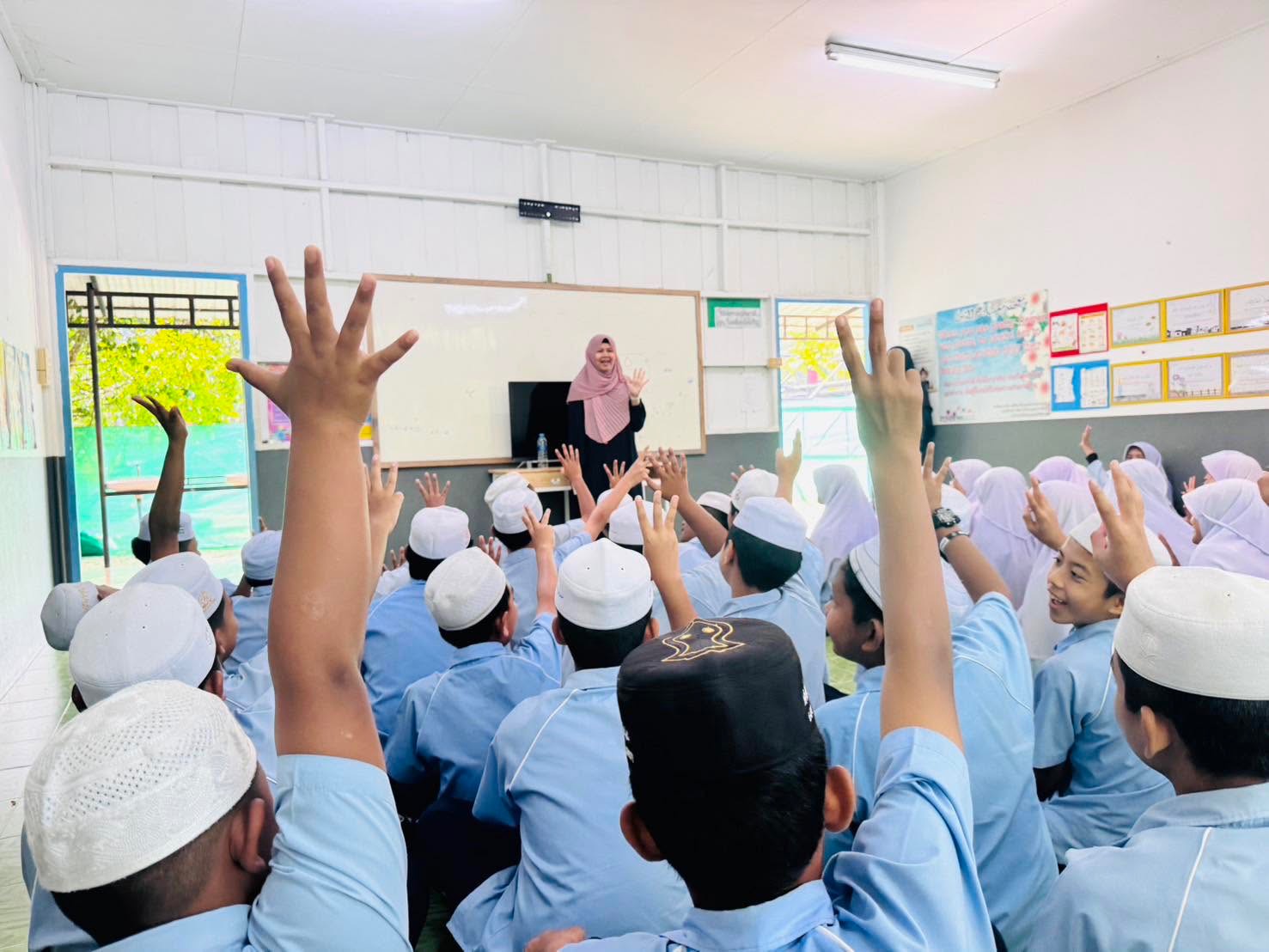
สองสิ่งที่ซีมนำติดตัวออกมาจากโครงการฯ คือวิธีมองปัญหาในแบบใหม่ และความเชื่อว่าครูคนหนึ่งสามารถสร้างการเปลี่ยนแปลงได้มากกว่าที่คิด สิ่งที่เธอเรียนรู้ในห้องเรียนที่กรุงเทพฯ ไม่ได้หยุดอยู่แค่นั้น แต่มันเดินทางกลับบ้านพร้อมกับเธอ หยั่งรากใน 3 โรงเรียน และยังส่งต่อไปถึงโรงเรียนที่เธอไม่เคยสอนเองด้วยซ้ำ
การลงทุนในครูผู้นำฯ 1 คนไม่ได้จบพร้อมกับโครงการฯ แต่เป็นจุดเริ่มต้นของการเปลี่ยนแปลงที่ตามมา
หากองค์กรของคุณสนใจร่วมมือกับเราในก้าวต่อไป ติดต่อเราได้ที่
📩 partnerships@teachforthailand.org
Zeem's Alphabet: How One Fellow's Classroom Became a System for 2,000+ Children

Every Fellowship story starts the same way: 1 teacher, 1 classroom, 2 years. But what happens after those 2 years is where the real story usually begins. Zeem - Uzma Daraman from Cohort 2, is proof of that.
Today, she is an Assistant Executive at the Prateepsas Group of Schools in Nakhon Si Thammarat, 3 Islamic private schools her family has run for years. She also founded her own language school "Pim Plearn Skills School", known locally as the "Giraffe School." Add it up across every school she touches and Zeem now reaches more than 2,000 students, from pre-kindergarten through high school.
But the number was never the point. The point is what she built to get there and how far it's since traveled.
The Problem Wasn’t the Student
Back when Zeem was a Fellow at Kaenthong Upatham School in Bangkok, she noticed something the curriculum hadn't accounted for: lower-secondary students still writing English letters backwards, some unable to recognize the alphabet at all. The textbook wanted her to move forward. The students needed her to go back.
So she did, going back to phonics, reading, writing and pronunciation, the foundations they should have learned years earlier.
"Forcing ourselves to keep teaching from the textbook," she said, "is like forcing someone who's afraid of water to swim."
Once the students could read, something shifted that had nothing to do with grammar drills. The kids who used to sit silently started raising their hands. The ones who avoided English altogether began showing up with song lyrics, asking what the words meant. Reading hadn't just taught them a subject, it had given them a reason to lean in.
One Classroom's Fix Becomes a School-Wide System
When the pandemic ended and Zeem returned to help run her family's schools, she found the same problem waiting for her, just multiplied. A year of disrupted learning had left students behind in English and this time she wasn't fixing it for one classroom. She was fixing it for all of them.
She earned a certificate in phonics. Trained every teacher in the school on it. Helped redesign the curriculum so phonics started as early as Kindergarten 3.
The result is visible. Most students finish primary school reading and writing at a level that stands out compared to other schools in the area. When they move on to Grade 7 elsewhere, teachers and interviewers often say the same thing: "Their English is strong. They're confident speaking up." For an Islamic private school in provincial Thailand, that's not something every school can claim.
A Ripple That Reached a School She'd Never Taught In
As a Fellow, Zeem's own teaching touched around 100 students across three or four classes. Once she started training teachers instead of just teaching students, that number grew to an estimated 300 to 400, not because she suddenly taught more children herself, but because she taught the people who did.
That reach eventually extended somewhere she'd never set foot. Through a family connection, staff at Udomsart Witthaya School in Yala asked if she'd train their primary English teachers. More than ten of them made the trip. Zeem ran the workshop, her own teachers led demonstration classes and the group worked through feedback side by side.
What Stays With a Community
Most of Zeem's students are Muslim children in provincial Thailand, many raised by grandparents while parents work in the city, in homes where English isn't something anyone can help with. The system Zeem built is often the most consistent support they have.
She carried two things out of her Fellowship: a new way of seeing problems and the conviction that one teacher can create more change than they think possible. What she learned in a single Bangkok classroom didn't stay in that classroom. It followed her home, took root in three schools and then once traveled somewhere she'd never even been.
Investing in one Fellow doesn't end when the Fellowship does. That's where it begins.
If your organization wants to be part of what happens next, reach out at:
📩 partnerships@teachforthailand.org