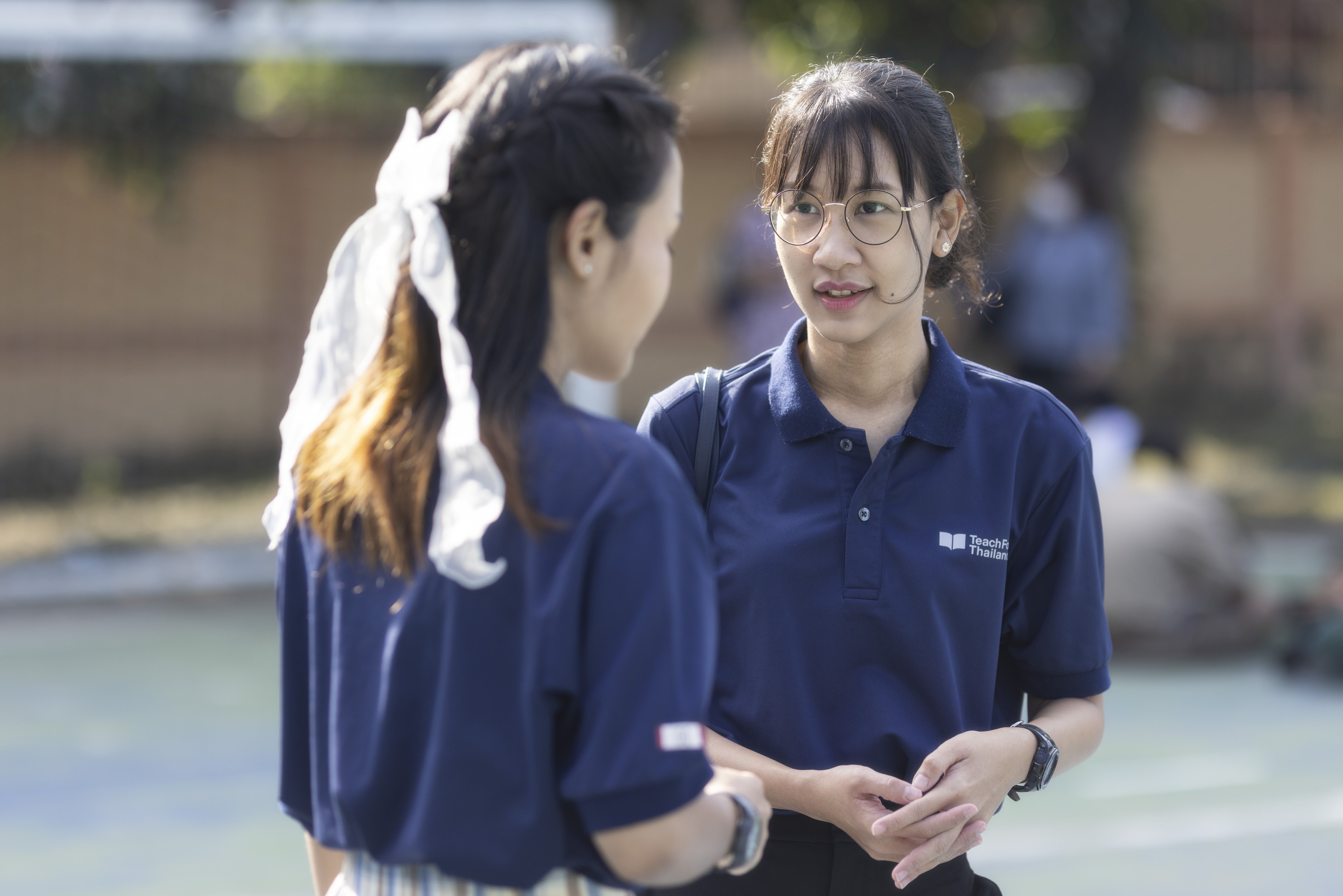
นั่นคือวันที่เธอเริ่มเข้าใจว่าปัญหาในห้องเรียนไม่เคยเกิดจากตัวเด็กคนเดียว
"ปัญหานักเรียนไม่ตั้งใจเรียน มันเชื่อมโยงหมด เพราะครอบครัวไม่ได้มีเวลาดูแล ไม่มีเงินซัพพอร์ต ไม่ได้กินข้าวเช้า ไม่มีสมาธิเรียน แล้วพอไม่มีสมาธิครูก็เริ่มดุ เด็กก็ไม่อยากเรียน หลุดออกจากระบบการศึกษาไป มันวนไปมาไม่จบสิ้น"
รวงข้าว ประชุมชน ศิษย์เก่าทีช ฟอร์ ไทยแลนด์ รุ่นที่ 5 ใช้เวลา 2 ปีสอนคณิตศาสตร์ที่โรงเรียนห้วยกระเจาพิทยาคม จ.กาญจนบุรี ดูแลนักเรียนกว่า 100 คนต่อปีการศึกษา สิ่งที่เธอสร้างในห้องเรียนไม่ใช่แค่บทเรียน แต่คือพื้นที่ที่เด็กกล้าเรียนรู้และกล้าตั้งคำถาม
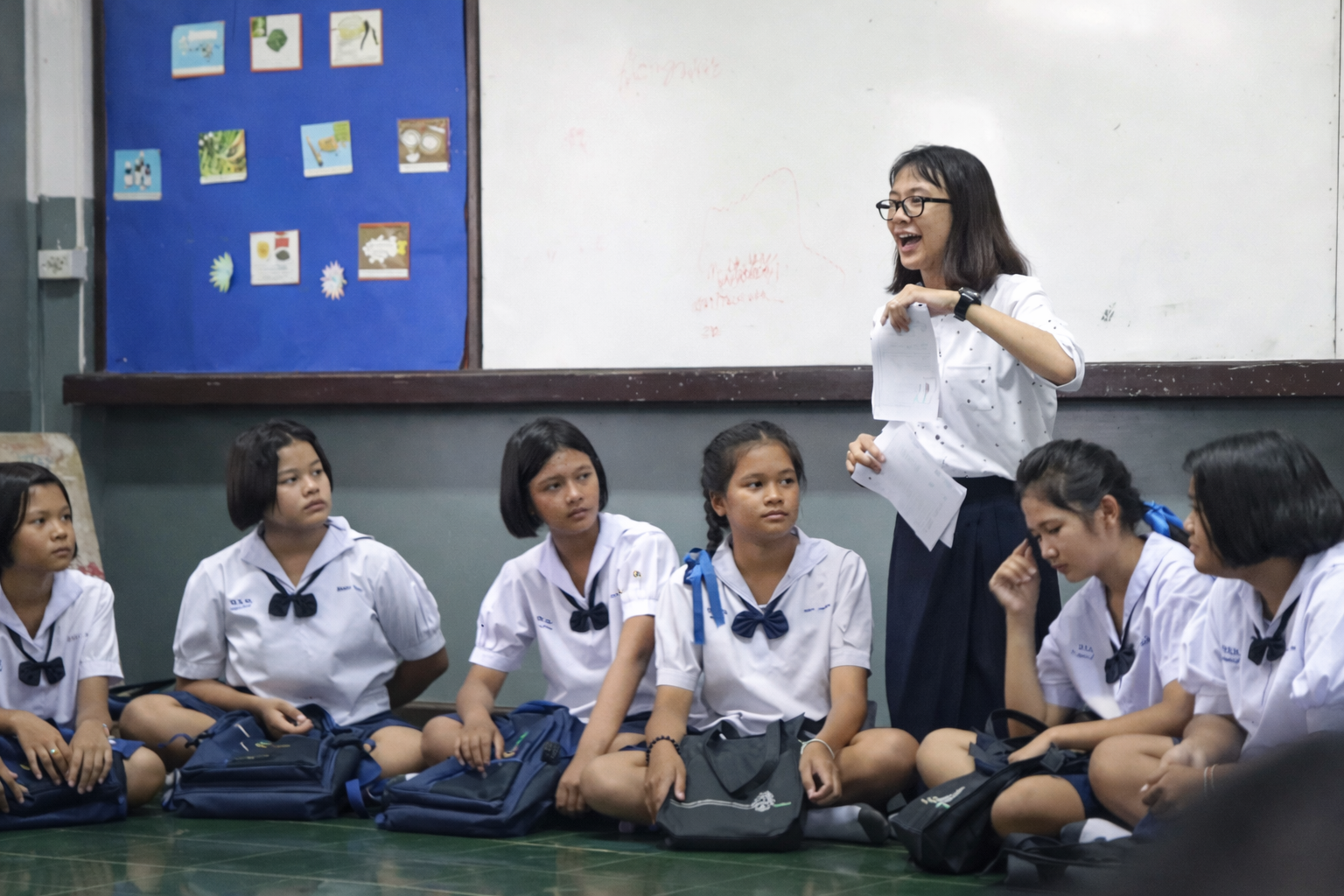
หนึ่งในนั้นคือนักเรียนห้องท้ายที่หารเลขไม่เป็น แต่ไม่ยอมออกไปกินข้าวจนกว่าจะทำโจทย์ให้ได้ รวงข้าวไม่รีบเฉลย แต่รอให้เขาค้นพบคำตอบด้วยตัวเอง หลังจากนั้นเขาพัฒนาขึ้นจนติดอันดับท็อปของห้องหลายครั้ง และในกลุ่มนักเรียนที่สอบตก รวงข้าวจัดสอนเสริมให้จนนักเรียนราวครึ่งหนึ่งสามารถกลับมาสอบผ่านได้
แต่สิ่งที่เธอค้นพบคือ ครูคนเดียวเปลี่ยนได้แค่ห้องเรียนของตัวเอง ถ้าอยากให้การเปลี่ยนแปลงขยายออกไป ต้องพัฒนาครู ไม่ใช่แค่พัฒนาตัวเอง
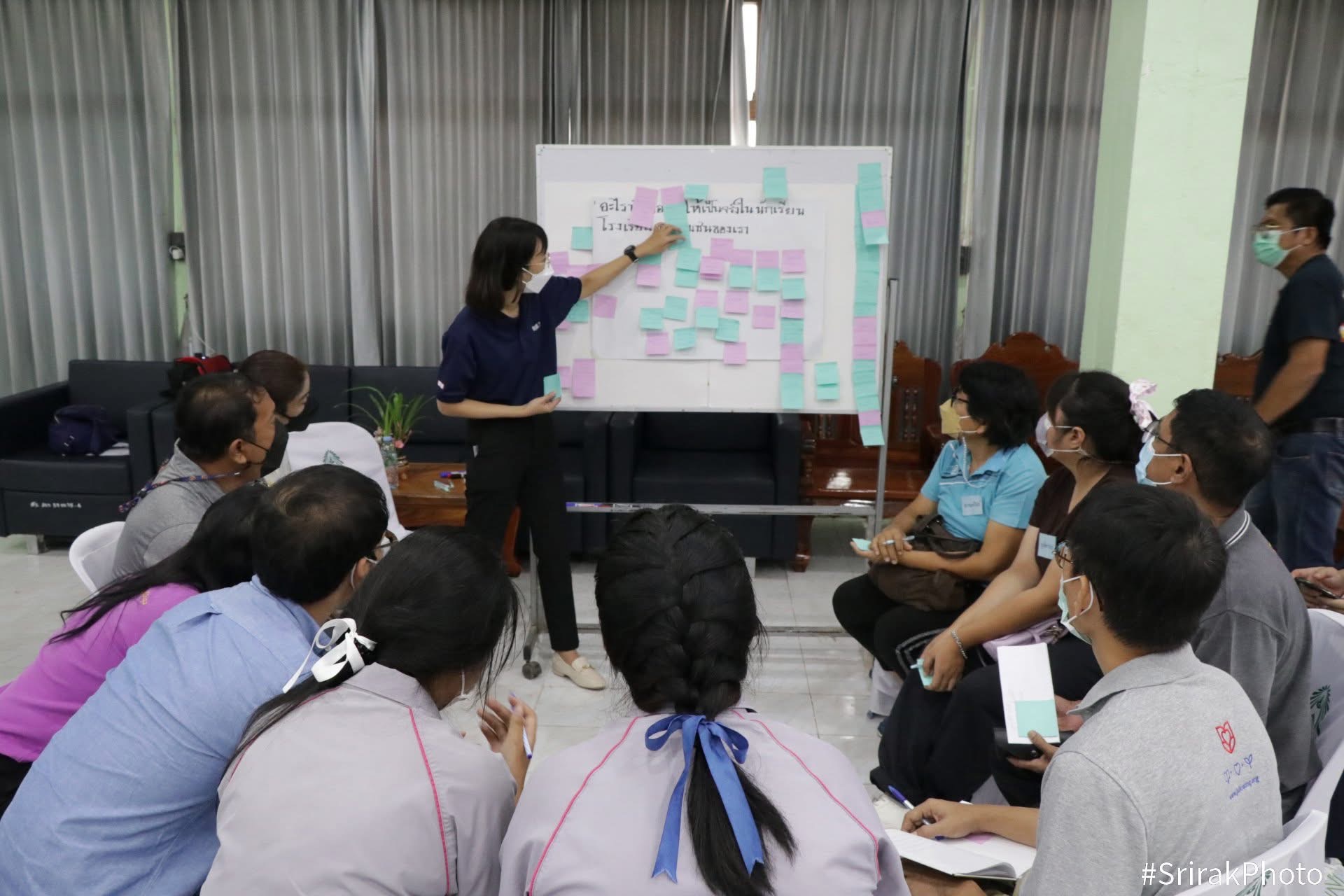
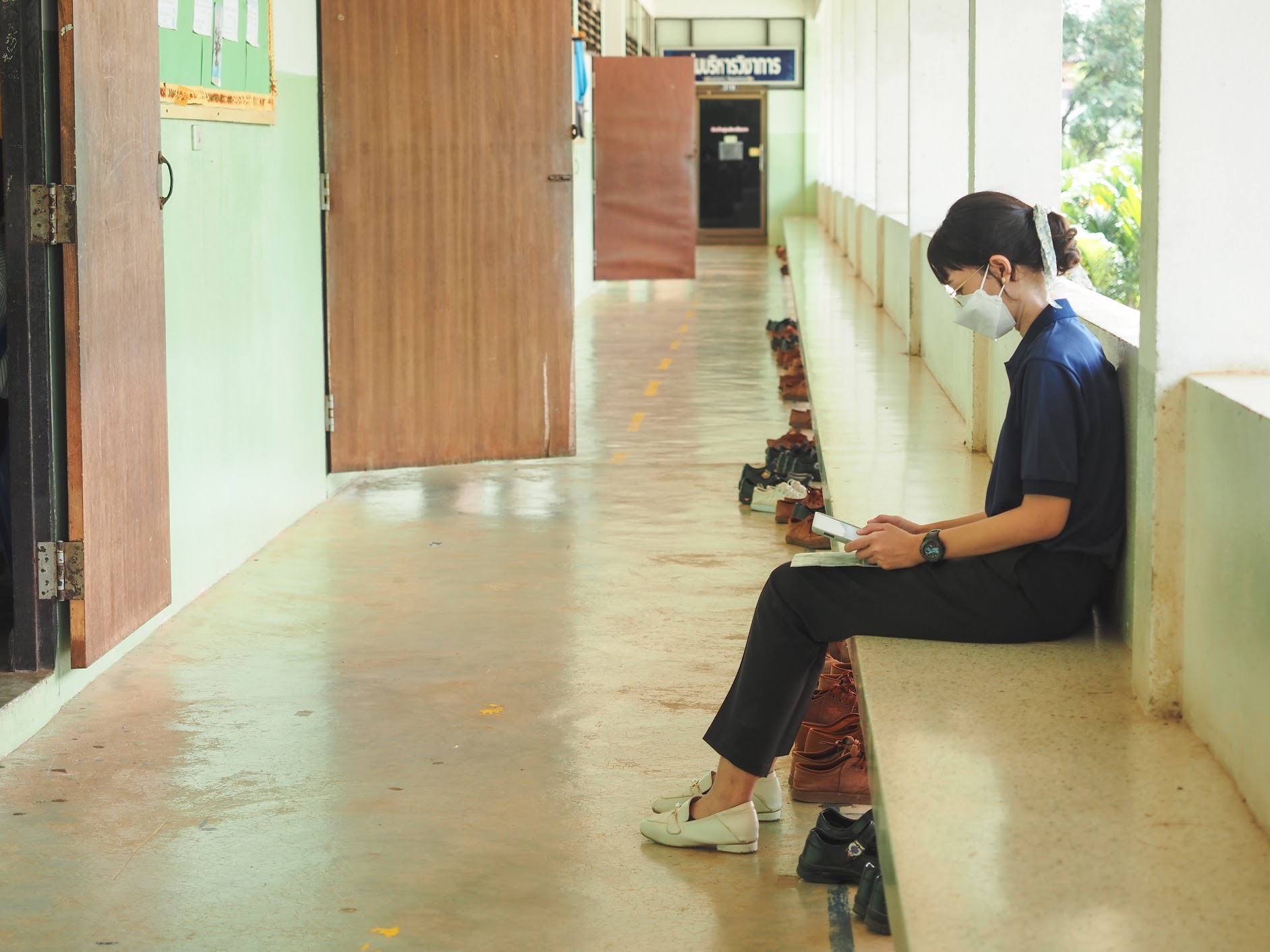
นั่นคือเหตุผลที่หลังจบโครงการ เธอเลือกกลับมาเป็นเจ้าหน้าที่พัฒนาครูผู้นำฯ (LDO) ที่ทีช ฟอร์ ไทยแลนด์ โค้ชและสนับสนุนครูผู้นำฯ กว่า 40 คนใน 10 กว่าโรงเรียนทั่วภาคตะวันออก เมื่อครูผู้นำฯ แต่ละคนดูแลนักเรียนหลักร้อยถึงหลายร้อยคน ผลกระทบจากการพัฒนาครูเหล่านั้นจึงส่งต่อไปถึงนักเรียนรวมกันกว่า 1,000 คน
"เราให้คุณค่ากับประสบการณ์สองปีของทีช ฟอร์ ไทยแลนด์มาก เลยอยากทำให้คนที่เข้ามาได้รับประสบการณ์ที่ดีและได้เรียนรู้เหมือนกัน"
วันนี้รวงข้าวนำวิธีคิดเดียวกันนั้นไปขยายผลในบทบาท Instructional Coach ที่ Generation Thailand ทำงานกับผู้สอนกว่า 300–400 คนจากหลากหลายอาชีพ หนึ่งในนั้นคือผู้สอนที่ไม่มีพื้นฐานด้านเทคโนโลยี แต่พยายามจนได้เข้ามาสอนในโครงการ Junior Software Developer ช่วงแรกฟีดแบคชัดเจนว่าพูดเร็วและสื่อสารไม่รู้เรื่อง หลังผ่านกระบวนการโค้ชกับรวงข้าวมา 2–3 ปี สิ่งที่ผู้เรียนพูดถึงเขาเปลี่ยนไปโดยสิ้นเชิง: "สร้างบรรยากาศการเรียนรู้ที่ดีมาก เป็นกันเอง และใส่ใจอธิบายชัดเจน"
"ถ้าเราไม่เคยเป็นครูผู้นำการเปลี่ยนแปลง เราจะไม่เข้าใจความต่างของผู้เรียนว่าเป็นอย่างไร แล้วเราจะสอนให้เข้าใจได้อย่างไร"
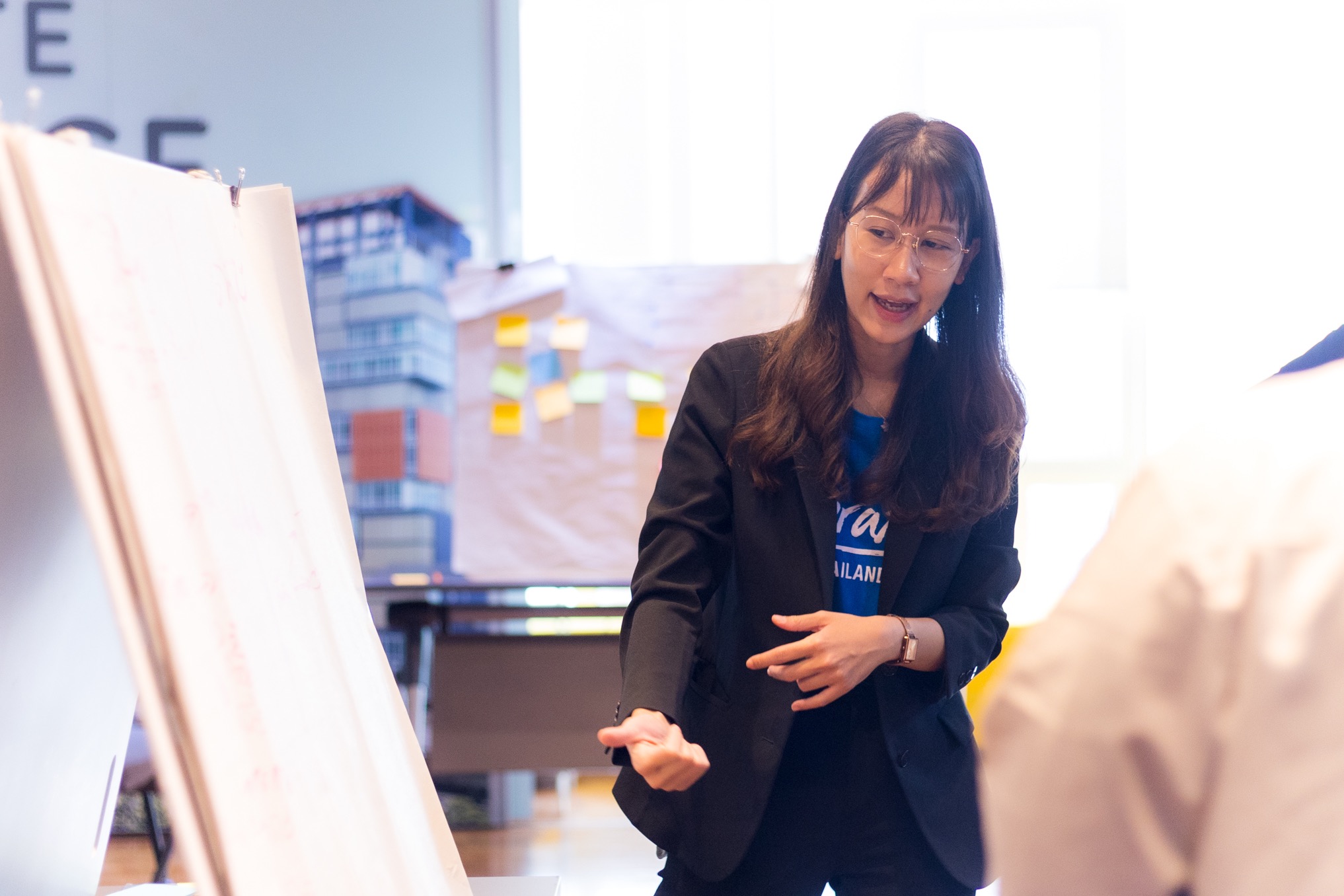

สิ่งที่เริ่มต้นจากนักเรียนคนหนึ่งที่ไม่ได้กินข้าวเช้า กลายเป็นวิธีคิดที่รวงข้าวส่งต่อให้ครูผู้นำฯ และผู้สอนหลายร้อยคน และผ่านพวกเขาไปถึงผู้เรียนอีกหลายพันคน การเปลี่ยนแปลงทางการศึกษาอาจเริ่มต้นจากคนคนหนึ่งที่เลือกจะ "เข้าใจ" ก่อนจะตัดสิน
หากองค์กรของคุณอยากเป็นส่วนหนึ่งในการสร้างโอกาสทางการศึกษา ติดต่อเราที่
📩 partnerships@teachforthailand.org
Changing Education by Developing People
There was one student Ruangkao will never forget.
He never paid attention in class, rarely submitted homework, and seemed completely disengaged from learning. Then one day, she sat down and talked to him. That was when she learned he had not eaten breakfast for several days.
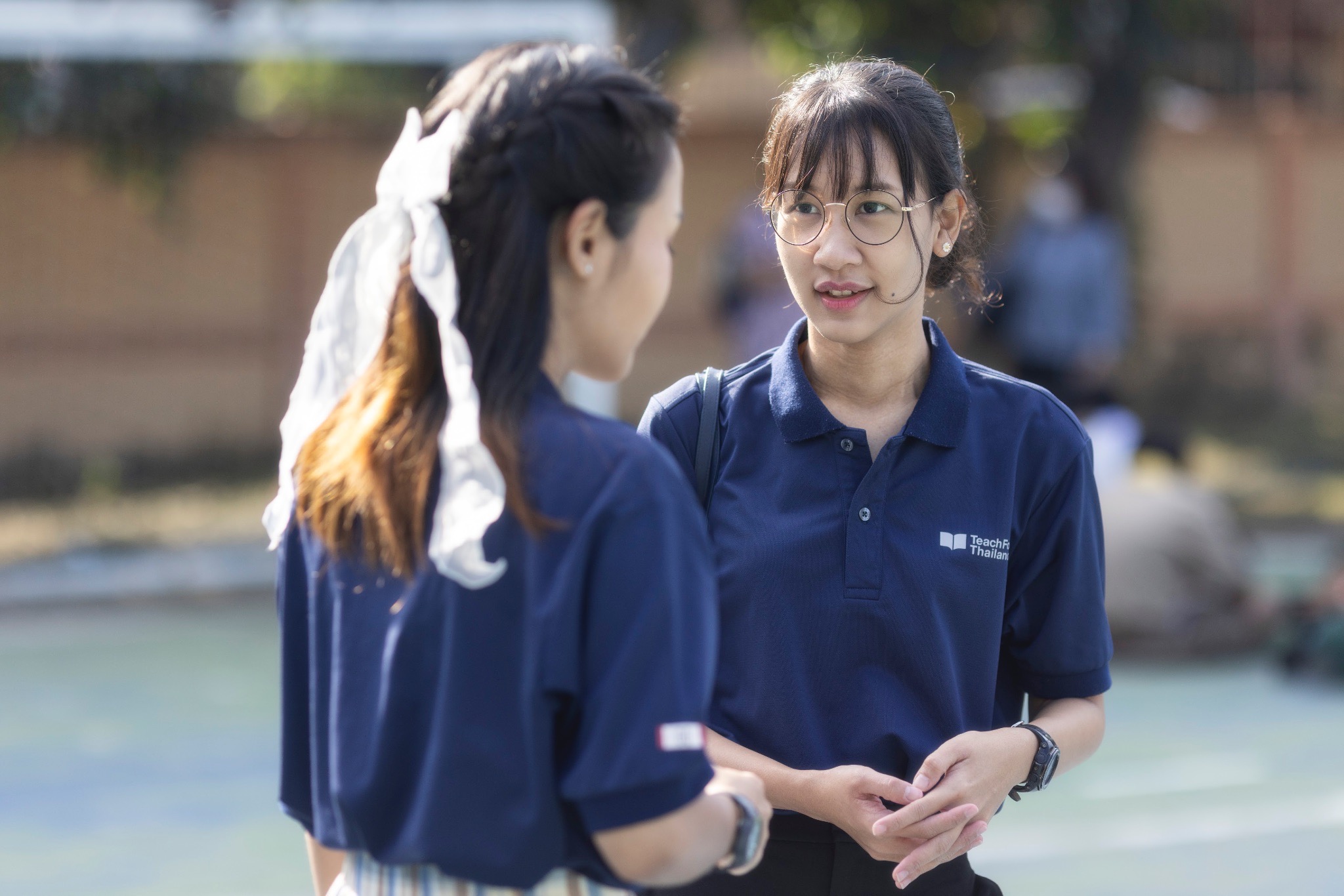
It was the moment she realized that problems in the classroom are never caused by the child alone.
“When students seem disengaged, it’s all connected. Maybe their family doesn’t have time to care for them. Maybe there’s no financial support. Maybe they didn’t have breakfast and can’t concentrate. When they lose focus, teachers get frustrated. Students lose motivation and eventually drop out. It becomes an endless cycle.”
Ruangkao Prachumchon, a Teach for Thailand Cohort 5 alumnus, spent two years teaching mathematics at Huay Krachao Pittayakom School in Kanchanaburi, supporting more than 100 students each academic year. What she built in her classroom was more than lessons — it was a space where students felt safe to learn and ask questions.
One student in the lowest-performing class struggled with basic division. Yet he refused to leave for lunch until he could solve a problem on his own. Rather than giving him the answer, Ruangkao patiently guided him through the process. Over time, he improved significantly and eventually ranked among the top students in his class several times.
For students who were failing, she organized additional tutoring sessions. By the end of the year, around half of those students were able to pass.
But the biggest lesson she learned was that a single teacher can only transform their own classroom. If change is to spread further, we must develop teachers — not just individual students.
That is why, after completing the Fellowship Program, Ruangkao chose to return to Teach for Thailand as a Leadership Development Officer (LDO). In this role, she coached and supported more than 40 Fellows across over 10 schools in the Eastern region. As each Fellow worked with hundreds of students, the impact of supporting those teachers reached more than 1,000 students collectively.
“I value my two years with Teach for Thailand so much. I wanted others to have a meaningful experience and learn as much as I did.”
Today, she applies the same mindset in her role as an Instructional Coach at Generation Thailand, where she supports 300–400 instructors from diverse professional backgrounds.
One instructor she worked with had no prior experience in technology but was determined to teach in the Junior Software Developer program. Early feedback from learners consistently pointed to the same challenge: he spoke too quickly and was difficult to follow.
After two to three years of coaching with Ruangkao, learner feedback changed dramatically: “He creates a great learning environment, is approachable, and explains concepts clearly and thoughtfully.”
For Ruangkao, the connection is clear.
“If I had never been a Fellow, I wouldn’t truly understand how different learners are. And without that understanding, how could I help others teach effectively?”
What began with a student who had not eaten breakfast became a mindset that Ruangkao has since passed on to dozens of Fellows and hundreds of instructors. Through them, it continues to reach thousands of learners.
Educational change may begin with one person choosing to understand before judging.
If your organization would like to be part of expanding educational opportunities across Thailand, we would love to explore partnership opportunities together.
📩 partnerships@teachforthailand.org